

Why Would You Need an Orthopedic MRI? 7 Common Reasons
Updated November 2025
In this article:
When it comes to diagnosing orthopedic conditions and injuries, medical imaging—such as an orthopedic MRI— plays a crucial role in providing accurate assessments. Magnetic Resonance Imaging (MRI) has become an invaluable tool for orthopedic specialists.
In this blog, we’ll explore seven common reasons why you might need an orthopedic MRI and shed light on its applications in orthopedics. We’ll also examine how to prepare for an MRI and why one may have been ordered.
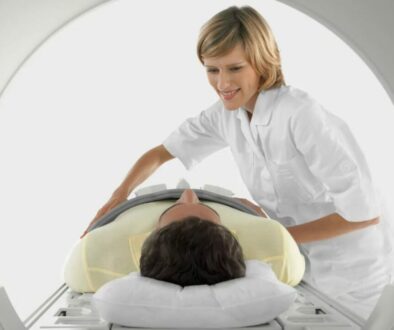
At the Raleigh Bone and Joint Surgery Clinic, we’re proud to have the first Open Bore MAGNETOM Verio 3T MRI in Wake County. This MRI has a larger opening that can more easily accommodate patients and help alleviate anxiety from claustrophobia. In addition, its advanced total imaging matrix technology means your exam will be faster while still providing the extraordinary, detailed images your orthopedic doctor in Raleigh needs to make a timely diagnosis. Not sure if you need an MRI? We invite you to request an appointment.
As we explore the many facets of orthopedic MRIs in this article, we’ll first take a look at the most common reasons for an MRI.
7 Common Reasons for an Orthopedic MRI
1. Evaluating joint disorders
An MRI can help identify joint abnormalities, such as osteoarthritis, rheumatoid arthritis, and cartilage injuries.
2. Assessing sports injuries
An MRI is frequently employed to diagnose conditions that result from sports injuries.
Some of these conditions include:
- Ligament tears (such as ACL or MCL tears)
- Muscle strains
- Tendonitis
- Stress fractures.
3. Detecting spinal conditions
An orthopedic MRI can reveal a variety of spinal conditions and help evaluate whether or not minimally invasive surgery would be the correct course of treatment.
Some of these conditions include:
- Spinal cord compression
- Herniated discs
- Spinal tumors
- Compression fractures
- Spinal deformities
At the Raleigh Bone and Joint Surgery Clinic, we’re experts at minimally invasive spinal surgery which is highly effective at treating the conditions listed above.
4. Diagnosing bone infections
Another application of an orthopedic MRI is that it can detect bone infections, including osteomyelitis, (inflammation of the bone) helping guide appropriate treatment.
5. Identifying tumors and masses
An MRI aids in the visualization and characterization of bone tumors, soft tissue masses, and cysts.
6. Assessing nerve-related issues
An MRI can provide detailed images of nerves, assisting in the diagnosis of conditions like pinched nerves and nerve compression syndromes.
7. Pre-surgical planning
Before surgeries, an orthopedic MRI can help surgeons assess the extent of injury or damage, aiding in surgical planning and decision-making.
At The Raleigh Bone and Joint Surgery Clinic, we take a conservative approach to medicine. This means that we will not suggest surgery until all other non-surgical options have been tried.
Why Do Orthopedic Surgeons Use MRI?
As we mentioned earlier, there are several instances in which you would need an MRI. However, we’d like to quickly review how the MRI works and why it’s such a valuable diagnostic tool that orthopedic surgeons frequently use.
It offers exceptional clarity, allowing us to visualize bones, joints, ligaments, tendons, and soft tissues with remarkable precision.
Should You Get an MRI Before Seeing an Orthopedic Surgeon?
Whether or not you should get an orthopedic MRI before seeing an orthopedic surgeon depends on your specific situation. In many cases, your primary care physician or general practitioner will initially evaluate your symptoms and conduct a physical examination. They may refer you to one of our orthopedic doctors in Raleigh.
The decision to proceed with an MRI typically rests with the orthopedic surgeon, who will assess the necessity based on your symptoms, physical examination, and medical history.
If you need an MRI, we’re proud to have Wake County’s first and only Open Bore MAGNETOM Verio 3T MRI. What this means for you is greater comfort and a quicker exam, which is a great relief for our clients who may be claustrophobic or uncomfortable in enclosed spaces.
Who Should Not Have an MRI Scan?
While an MRI is a highly effective diagnostic tool, there are certain situations where it might not be recommended. For example:
- Pregnancy: Due to the strong magnetic fields involved, MRI is generally avoided during pregnancy, especially during the first trimester.
- Pacemakers or certain implants: Some medical devices may be affected by the magnetic fields of an MRI machine, so individuals with pacemakers or certain implants may need alternative imaging methods.
- Severe Claustrophobia: MRI machines require the patient to lie still within a confined space. If you suffer from severe claustrophobia, you may find the experience challenging. Open MRI machines—such as the one at The Raleigh Bone and Joint Surgery Clinic –or sedation options can be considered in such cases.
Why Did My Orthopaedic Surgeon Order An MRI?
Our board-certified orthopedic surgeons in Raleigh use a variety of methods to arrive at an accurate and timely diagnosis. We listen to our patients, paying close attention to their symptoms. We’ll frequently ask when they started and if they began after a certain activity or injury. We’ll also conduct a thorough examination.
But often, an X-ray, MRI or other type of medical imaging scans is needed.
What is an MRI and Other Common Body Scans?
MRI Machine
Magnetic resonance imaging uses a really powerful magnet to see the soft tissues that X-rays don’t show well. It provides us with a clear view so we can see:
-
- Damage and more subtle wear from arthritis or injury to the cartilage on the bone, the meniscus or labrum (which act like spacers) in the joint
- Ligament tears or stretches
- Bruising in the muscle, tendon or bone
- Muscle strains or tears
- Inflammation or damage to the tendons
- Swelling
- Fluid collections
- Tumors
-
How Does an Orthopedic MRI Work?
Unlike an X-ray or CT scan that uses radiation, an MRI utilizes powerful magnets to capture detailed images that appear like “slices.” These slices are used to create a 3D rendering.
X-rays
X-rays are instrumental in viewing the condition of bones, enabling us to see fractures or breaks. X-rays can also help us see:
Signs of arthritis
- Bone spurs
- Narrowing of space between the joints
- Calcium deposits (which can be a sign of arthritis)
- Bones that are weakened due to conditions such as osteoporosis
- Joint dislocations
CAT Scan vs MRI
A CT or CAT scan is like a much more sensitive X-ray and can show the above conditions from many angles. Unlike a CT scan, an MRI uses a magnet to view tissues.
Ultrasound
Ultrasounds provide moving pictures in real-time, enabling us to view muscles, tendons and some bones. We often use ultrasound to guide injections as well look for causes of popping or clicking that other imaging can’t show as well.
Bone Scan
Occasionally, we will use bone scans to look for areas that a bone is trying to heal or strengthen itself. We may order one if we’re looking for:
- A stress fracture
- Shin splints
- Loosening of a total joint replacement
- Tumor
- Other similar issues
It is less sensitive than the other studies but is often used to help focus in on a more specific location for the diagnosis.
This is different from a bone density study which looks more specifically for osteoporosis.
Combinations
Most often, we will need more than one of these types of studies to paint a more complete picture of a diagnosis. Each one provides something that adds to homing in on the correct issue and, therefore, developing the right treatments.
So, don’t be surprised if we have to order more than one type of study – it’s how I can treat you best and these “pictures” are often worth a thousand words.
We’ve reviewed what an MRI is, common conditions you may need to have one, and the various scanning tools and technology our orthopedic doctors in Raleigh use to provide accurate diagnoses.
But how do you prepare for an MRI? Are there any special precautions you need to take? Below, we’ll give you a complete guide so you know exactly what to expect and how to prepare.
A Step-by-Step Preparation Guide for Your Orthopedic MRI
If one of our orthopedic surgeons in Raleigh has told you that you need an MRI, the good news is that preparation is straightforward.
An orthopedic MRI is instrumental in allowing us to carefully examine all the details of joints, bones, cartilage, and tendons. This non-invasive test helps us tailor a customized treatment plan for you.
We’ll take a closer look at orthopedic MRIs, how to prepare, how an MRI works, and the benefits of our state-of-the-art open bore MRI.
Preparing for Your Orthopedic MRI
There’s very little you need to do to prepare for your orthopedic MRI. You’ll find that most of the preparation centers around having open and effective communication with your provider.
By adhering to the following tips, you’ll have a much more positive experience:
1. Have a Conversation With Your Orthopedic Surgeon
This will give you a good idea of what to expect. It will also give you the chance to ask questions—and we’re dedicated to taking the time to provide whatever information you need. We’ll also let you know why we feel an MRI is needed for your course of care.
2. Let Us Know If You Have Any Implanted Medical Devices
Some medical devices are certified as MRI-safe, and you must know if yours are before scheduling your MRI. Because the MRI utilizes a powerful magnet, having one of these devices means you may not be able to have an MRI.
These devices include:
- Any metallic joint prostheses
- Pacemakers
- Implanted devices such as heart defibrillators, drug infusion pumps, or nerve stimulators
- Artificial heart valves
- Any metallic pins, plates, stents, or screws
- An intrauterine device
Before you have an orthopedic MRI, you also need to let us know if you have any metal fragments in your body such as bullet fragments or shrapnel. If you have these, you may not be eligible for this imaging test.
3. Talk to Us if You Have Tattoos or Permanent Makeup
In certain cases, the darker inks contain metal. These might affect your MRI. Just talk to us and we’ll let you know if an orthopedic MRI is the right choice for you.
4. Let Us Know If You Think You’re Pregnant or Breastfeeding
Research has been ongoing on how magnetic fields affect fetuses. If you’re pregnant, speak to us about different types of imaging exams. While every case is different, in some instances, this may warrant postponing the MRI.
You should also let us know if you’re breastfeeding—particularly if you will receive a contrast during the procedure. A contrast is a temporary, chemical “dye” that enhances the quality of MRI images we receive.
5. Work With Us on a Comprehensive View of Any Health Problems
We take a comprehensive approach to your healthcare. That means we want to be familiar with your medical history.
If you have had issues or diseases that affect your liver or kidneys, we need to know. This may affect how we use it or if we limit the contrast.
6. Follow Our Instructions for Eating or Drinking Before the MRI
The good news is that there are rarely dietary restrictions before having an orthopedic MRI—meaning you can eat normally before your procedure. If we need you to follow any dietary restrictions, we will let you know before your imaging procedure.
7. Wear Something Comfortable on the Day of the Exam
While typically, you’ll be asked to change into a hospital gown, we do suggest wearing comfortable clothing. We also suggest that you not wear any makeup or cosmetics on the day of the procedure because some of these contain metal particles.
8. Avoid Wearing Anything Metallic
Because the MRI uses a powerful magnet to capture images, you must avoid wearing anything metallic. This includes:
- Any jewelry, including watches
- Hearing aids
- Glasses
- Wigs
- Dentures
- Hairpins
- Underwire bras
What Is an Open Bore Orthopedic MRI?
Are you slightly claustrophobic? Maybe you simply get uneasy with the thought of being “inserted” into a tubular medical device.
That’s where our open bore MRI can make things more comfortable for you without sacrificing the high-resolution images we need to treat you. The first and only Open Bore MAGNETOM Verio 3T in Wake County, its larger opening can more easily accommodate patients of different sizes and help relieve the anxiety of those who are leery of small spaces.
In addition, our MRI utilizes Exclusive Tim ™ (total imaging matrix) technology, which enables us to conduct exams faster without losing quality—which means you can be assured we’ll have all the information we need to arrive at an accurate diagnosis.
The Raleigh Bone and Joint Clinic Has a Longstanding Tradition of State-of-the-Art Medicine Coupled With Compassionate Care
Orthopedic MRIs are useful imaging tools to help us reach a diagnosis and create a treatment plan tailored for you. We are the first and only orthopedic practice in Wake County to offer our cutting-edge Open Bore MRI technology.
Scheduling an appointment for your MRI is simple. Just call (919) 322-8619. Please check with your insurance provider, as some may require that you visit one of our physicians before your scan.
Orthopedic MRIs Are Just One of The Many Services Offered at the Raleigh Bone and Joint Surgery Clinic
If you’re experiencing orthopedic pain or have concerns about a potential musculoskeletal condition, don’t hesitate to schedule an appointment with one of our board-certified orthopedic specialists in Raleigh. We’ll determine if you need an MRI and use the information to tailor a treatment plan for you.
For nearly 50 years, we’ve offered patients the highest quality care through our fellowship-trained, leading orthopedists in Raleigh. Our affiliation with five local hospitals means you have a greater choice about where to get care. In addition, we have convenient, in-house physical therapy to help you on your recovery journey.
To schedule an appointment, please contact us. We’d love the opportunity to be your medical provider.
Key Takeaways
- Orthopedic MRIs play a vital role in diagnosing joint, bone, and soft tissue conditions with precision and clarity.
- MRI technology allows orthopedic specialists to detect injuries, arthritis, spinal issues, and nerve problems that X-rays can’t reveal.
- Common reasons for an orthopedic MRI include sports injuries, spinal abnormalities, bone infections, and pre-surgical evaluations.
- MRIs help surgeons plan procedures more effectively by providing detailed images of affected areas.
- Orthopedic surgeons rely on MRI because it delivers exceptional soft tissue contrast without radiation exposure.
- Your orthopedic surgeon will determine if an MRI is necessary after reviewing your symptoms, exam, and medical history.
- MRIs may not be suitable for patients with pacemakers, certain implants, or severe claustrophobia—but open MRI technology offers a comfortable alternative.
- Raleigh Bone and Joint Surgery Clinic offers Wake County’s first Open Bore MAGNETOM Verio 3T MRI for faster, more comfortable exams.
- An orthopedic MRI uses strong magnetic fields and radio waves to create detailed, 3D images of internal structures.
- X-rays, CT scans, ultrasounds, and bone scans may be used alongside MRIs to provide a complete diagnostic picture.
- Preparing for an MRI involves removing metallic items, sharing your medical history, and following your provider’s safety instructions.
- The open bore MRI is ideal for patients who are anxious or claustrophobic, offering comfort without sacrificing image quality.
- The clinic’s advanced imaging technology and conservative approach ensure accurate diagnoses and personalized treatment plans.
- With nearly 50 years of experience, Raleigh Bone and Joint Surgery Clinic combines state-of-the-art orthopedic care with compassion and expertise.
- Orthopedic MRIs are just one of many in-house services, including surgery, physical therapy, and ongoing patient support.
====
Sources:
American Academy of Orthopaedic Surgeons, “Arthritis: An Overview,” https://orthoinfo.aaos.org/en/diseases–conditions/arthritis-an-overview/
American Academy of Orthopaedic Surgeons, “Osteoporosis,” https://orthoinfo.aaos.org/en/diseases–conditions/osteoporosis/
Johns Hopkins, “Osteomyelitis,” https://www.hopkinsmedicine.org/health/conditions-and-diseases/osteomyelitis#:~:text=Osteomyelitis%20is%20inflammation%20or%20swelling,can%20happen%20at%20any%20age
Juutilainen J. Effects of low-frequency magnetic fields on embryonic development and pregnancy. Scand J Work Environ Health. 1991 Jun;17(3):149-58. https://pubmed.ncbi.nlm.nih.gov/2068553/
The content within this article and others on this website is only for educational purposes and should not be considered medical advice. For any questions or concerns, please consult with your healthcare provider.