The Advantages of Ultrasound-Guided Carpal Tunnel Release
Updated November 2025
In this article:
Picking up a coffee mug, typing on your computer, opening the door–chances are, you take for granted the thousands of tasks your hands perform until you need an orthopedic hand doctor.
From arthritis to carpal tunnel syndrome to wrist and finger injuries, our orthopedic doctors in Raleigh can provide the care you need to get your hands back to their optimal level of function.
In this article, we’ll take a closer look at one of those conditions—carpal tunnel syndrome. We’ll also review how our ultrasound-guided carpal tunnel release can help you, along with the top benefits of working with one of our orthopedic hand specialists in Raleigh.
In addition, we’ll examine some of the most common hand and wrist conditions affecting office workers and those who perform repetitive tasks (as well as provide effective solutions!)
At the Raleigh Bone Joint Surgery Clinic, all of our board-certified physicians have decades of experience and are recognized as leaders in their field. This means they have access to the latest techniques and technology to help you.
In addition, for your convenience, we have a doctor who is available 24/7. This is just one reflection of our dedication to the community. We believe you don’t have to sacrifice quality for convenience. Are you having wrist pain? If so, we encourage you to contact us to request an appointment.
So what is ultra–minimally invasive carpal tunnel release under ultrasound guidance? And why is this technique better than traditional procedures?
What Is Carpal Tunnel Syndrome?
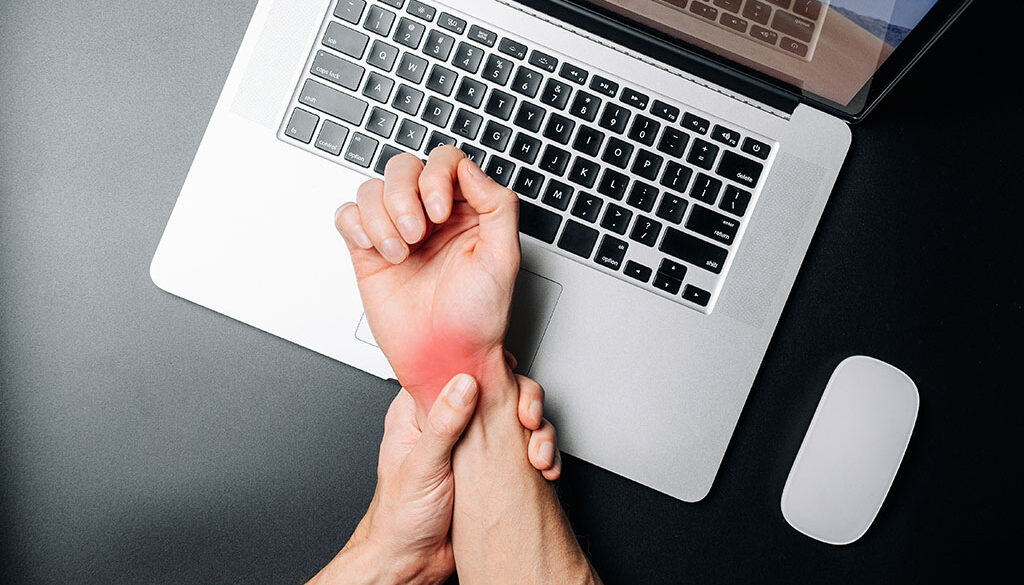
Carpal tunnel syndrome is very common, affecting 1 out of every 20 Americans. It causes numbness, tingling, and pain, especially in the thumb, pointer finger, and middle finger. It is often worse at night.
Patients often have to change what they are doing or shake their hands out to make their symptoms feel better.
What Is Ultrasound-Guided Carpal Tunnel Release?
All carpal tunnel releases work by releasing pressure off of an important nerve at the level of the wrist, called the median nerve.
Advantages of the Ultrasound-Guided Carpal Tunnel Release Procedure
There are several advantages of an ultra-sound guided carpal tunnel release. We’ve listed a few below:
Utilizes Small Amount of Medicine
This procedure can be done with only a small amount of numbing medicine on the palm. This means that no “sleeping tube” needs to be placed down the patient’s throat.
No Need for Nerve Blocks
Expensive and painful nerve blocks are also not necessary. This type of surgery is less expensive for the patient and also is a great option for patients with other medical issues that make anesthesia difficult.
No Tourniquet Needed
Ultrasound-guided carpal tunnel release also is performed without a tourniquet. A tourniquet is a tight band that squeezes the arm being operated on so that the surgeon can see. Because our bone and joint doctors in Raleigh use ultrasound guidance, a tourniquet is not used.
It Uses a Small Incision
This procedure is done through a very tiny poke incision. Ultrasound-guided carpal tunnel release is the most precise way of releasing the pressure on your nerve without cutting and harming things that are not involved with causing the carpal tunnel syndrome.
This tiny poke incision is located on the forearm near the wrist. It is placed to avoid incisions on the palm that are more likely to be painful and interfere with activities after surgery. As a result, many patients who have USG carpal tunnel release return to all activities right away. No splint is necessary after surgery.
Let Our Ultrasound-Guided Carpal Tunnel Release Procedure Provide the Relief You Need
Do you have carpal tunnel syndrome? Does anyone you know or love have carpal tunnel syndrome? If so, call 919-872-5296 to schedule a visit with a North Carolina carpal tunnel specialist in Raleigh.
But wrist problems aren’t limited to carpal tunnel syndrome. There are a host of other conditions that affect the wrist, and office workers are particularly vulnerable. Next, we’ll take a look at some tips for relief.
Office Workers and Wrist Pain: Relief is in Sight
Even though the picks, short-handled shovels and sweltering heat of yesterday’s workplace have been replaced with monitors, keyboards, and air-conditioning, work-related aches and pains are very real and very common. Much like the manual laborer or factory line-worker, today’s office-bound employee faces their own unique set of hand and wrist maladies.
These fall into three main categories:
- Neuropathies (nerve irritation)
- Tendinopathies (tendon irritation)
- Arthritis (long-term wear and tear or inflammation of joints)
While one’s work duties may not directly cause arthritis, tendonitis, or nerve compression, workplace posture or activities can contribute to or “un-mask” these problems if they already exist.
For example, a woman who has very mild cubital tunnel syndrome (compression of the ulnar nerve at the elbow causing numbness/tingling in the small and ring finger) may find that her symptoms worsen when she starts a job as a receptionist. Holding a phone to her ear for most of the day requires the elbow to be held in a flexed (bent) position which places tension and pressure on the ulnar nerve at the level of the elbow.
What Are Symptoms of Nerve Irritation?
Symptoms of nerve irritation include:
- Decreased sensation
- Feeling “pins and needles:
- Pain that is often described as burning, stabbing, or aching
- Symptoms that get worse at night
- A need to “shake out” the pain
Conditions Affecting the Hand and Wrist
The most common nerve conditions affecting the hand and wrist are:
- Carpal tunnel syndrome (compression of the median nerve at the wrist)
- Cubital tunnel syndrome (compression of the ulnar nerve at the elbow)
It is important to keep in mind that compression of the same nerves at the level of the neck can closely mimic carpal and cubital tunnel syndrome, so being examined by a properly trained specialist is crucial to pinpoint the correct diagnosis.
In the early 90s, with the advent of the personal computer and its use in the workplace, fears arose that an epidemic of keyboard-related carpal tunnel syndrome was sweeping the nation. However, subsequent studies have failed to support the idea that keyboard use and other repetitive movements directly cause carpal tunnel syndrome.
There are several elements that have a much stronger association with carpal tunnel syndrome. These are:
- Genetics
- Age
- Being female
- Obesity
- Diagnosis of diabetes mellitus
How Are Nerve Syndromes Treated?
Treatments for nerve syndromes include:
- Splinting (especially at night)
- Anti-inflammatories
- Injections (if other conservative methods have failed)
Although sometimes helpful, these treatments are unlikely to solve the underlying problem and your surgeon may recommend surgical release or “decompression” of the nerve.
It is important to keep in mind that non-operative treatments for nerve compression are usually reserved for very mild cases, and “just living with” your symptoms or avoiding treatment can lead to unfortunate effects of permanent sensory loss, weakness or loss of fine motor control.
The most common upper extremity tendinopathies affecting the office worker include flexor tendonitis or “trigger finger,” “deQuervain’s tendonitis at the base of the thumb, and lateral epicondylitis, also called “tennis elbow.”
What is “Trigger Finger?”
Flexor tendonitis (trigger finger) most commonly causes pain and tenderness in the palm and a feeling of popping or catching with movement of the fingers.
Symptoms can become so severe that patients may wake up in the morning with the involved finger stuck in a bent position, requiring them to open the finger with their other hand.
What Is deQuervain’s Tendonitis?
deQuervain’s tendonitis is actually an irritation of an extensor tendon that wraps around the wrist and inserts onto the base of the thumb.
What Is “Tennis Elbow?”
Lateral epicondylitis is a very common but poorly understood condition causing pain and tenderness at the outside of the elbow. Despite its common name of “tennis elbow,” very few patients with this condition play tennis!
Again, common treatments for these conditions begin with:
- Rest
- Icing
- Splinting
- Steroid injections
- Avoidance of aggravating activities
Many tendon problems can be cured with these treatments, especially if inflammation or aggravating repetitive motions are the cause. However, if these treatments fail, your surgeon may recommend a procedure to “free up” the tendon to allow it to glide back and forth with less friction and less pain.
Help Through Ergonomics
Simple adjustments to one’s working environment and posture, also called ergonomic adjustments, can help prevent and alleviate painful upper extremity conditions.
Certain specialists, including occupational therapists, are trained and specialize in ergonomic workplace optimization. These specialists evaluate a worker’s positioning, movements, and situation and make recommendations to optimize workplace ergonomics.
Common recommendations include:
- Positioning the wrists in neutral (straight) position
- Ensuring the keyboard is slightly lower than the level of the elbow
- Making sure the shoulders held back
- Having the monitor at just below eye level
There are scores of commercially-available ergonomic mice and keyboards to position the hands and wrists in a more neutral position.
You Don’t Have to Live With the Pain; Our Orthopedic Doctors in Raleigh Can Help You
If simple ergonomic adjustments do not work to alleviate pain or symptoms, it may be time to schedule a visit with an orthopedic hand and upper extremity specialist in Raleigh. Our physicians are specially trained in accurately diagnosing and effectively treating conditions of the hand and wrist using both surgical and non-surgical treatments.
Whatever might be keeping you from doing what you do best, know that The Bone & Joint Surgery Clinic is here for you. Contact us to request an appointment.
The Top 10 Ways an Orthopedic Hand Doctor Helps You With Hand and Wrist Treatment
1. Treating Hand Injuries
Some of the most common hand injuries include sprains, fractures and strains.
Other injuries include:
- Skier’s thumb, which causes pain, weakness, and swelling. It’s caused when the thumb makes a sudden outward movement.
- Mallet finger, also called “baseball finger” is usually caused by something forcefully hitting the fingertip, causing it to bend at an awkward angle. It causes drooping fingers, swelling, pain, and problems straightening the affected finger.
- Jersey finger (ring finger avulsion) occurs when the flexor tendon is torn. It gets its name from injuries that occur in football when a player grabs an opponent’s jersey. The finger gets “stuck” in the jersey, and as a result, it’s forcefully extended, which can cause extensive injury.
2. Treating and Managing Arthritis
There are several types of arthritis, and these can make it difficult and painful to move your fingers or your wrist. The most common is osteoarthritis, caused by wear and tear on the cartilage that cushions the joints.
Treatment includes everything from steroid injections to surgery.
At the Bone and Joint Surgery Clinic of Raleigh, we take a conservative approach to medicine. This means that we will only consider surgery and more invasive techniques after conservative, nonsurgical approaches have been unsuccessful.
3. Managing Carpal Tunnel Syndrome
If you’re an office worker or you have to perform numerous repetitive motions all day, you’re all too familiar with the pain and inconvenience of carpal tunnel syndrome.
While this is technically a wrist injury, as it progresses, it can affect the entire hand’s ability to hold and grasp objects—or even complete a task as simple as pushing a shopping cart.
If not treated, it can become worse, and in extreme cases, may lead to permanent nerve damage. Your orthopedic hand doctor will work with you to help alleviate this wrist condition that can affect the functionality of your entire hand.
We’re experts at treating carpal tunnel syndrome through medications, physical therapy exercises, and steroid injections. If these methods are not successful, surgery is an option.
4. Ensuring That Fractures Are Healing Correctly
If your fracture doesn’t heal correctly, it can set the stage for more serious problems further down the line. These issues can include:
- Stiffness
- Loss of Range of Motion
- Weakness
- Pain
- Deformities
Therefore, it’s vital to have the assistance of one of our orthopedic hand doctors in Raleigh for hand and wrist treatment.
5. Performing Surgery
As we mentioned earlier, our orthopedic hand doctors in Raleigh don’t immediately consider surgery as the first option. Our more conservative approach to medicine means we’ll only perform surgery if it is absolutely necessary.
But there are times when it is imperative to ensure proper healing and restoring function to your hand, wrist, and fingers. We implement minimally invasive, state-of-the-art arthroscopic surgery as a part of hand and wrist treatment, which can dramatically reduce the time it takes for you to recover.
6. Resolving Nerve Compression Issues
If excessive pressure is pushing on a nerve, it can cause pain and even damage to the nerve. Our orthopedic doctors in Raleigh can help resolve these issues through providing an accurate and detailed diagnosis that sets the stage for a treatment plan tailored just for you.
7. Assisting With a Physical Therapy Plan
Did you know we have physical therapy services on-site?
Our orthopedic hand doctors will work closely with your physical therapists as part of the healthcare team to assist in providing a regimen that will help your condition. Often, physical therapy is a vital part in the healing process of hand and wrist treatment, and is needed to ensure a 100% recovery.
8. Fixing Dislocations
While you may hear of dislocated shoulders more often, the bones in your hand are still susceptible to being dislodged from where they should be. This is most often caused by:
- Trauma, such as a fall
- Sports injuries
- Motor vehicle accidents
- Joint hypermobility
- Workplace injuries
- Congenital conditions
9. Treating Infections
Hand infections have to be carefully treated because if not they can lead to more serious problems—even prompting the need for surgery in severe cases.
Hand infections can be caused by:
- Puncture wounds
- Severe cuts
- Animal bites
- Ingrown nails
- Embedded foreign objects
- Pre-existing skin conditions
- Compromised immune system
10. Treating or Removing Ganglion Cysts
These noncancerous, fluid-filled lumps are typically found near a tendon or joint in your hand. They may also be found on the wrist. These soft growths vary in size.
Just because you have a ganglion cyst, doesn’t mean that it needs to be removed. Whether or not you’ll need to have it removed depends upon if it’s causing pain, impeding your ability to use your hand, or if it keeps recurring. Some people prefer to have the cyst removed for cosmetic purposes.
The cyst may be aspirated (drained) or surgically removed.
Hand Surgeon vs Orthopedic Surgeon: The Difference
A hand surgeon is a type of orthopedic surgeon who has had further specialized training in hand treatment. Their scope of practice is focused on diseases and injuries that affect this part of your skeletal system.
An orthopedic hand surgeon also has specialized training, which typically takes the form of a one- to two-year fellowship program focusing on hand and upper extremities in addition to medical school and residency.
Do Orthopedic Doctors Treat Fingers?
Yes, orthopedic doctors do treat fingers, and many specialize in this area. In addition to surgery, they may also help you recover from conditions that affect the fingers. We’ve listed some of these above, but others may include:
- Dupuytren’s contracture, which causes the fingers to bend inward
- Nailbed injuries that affect the structure of the fingers
- Finger infections, such as cellulitis
- De Quervain’s tenosynovitis, which occurs when tendon inflammation makes it difficult to move the thumb
- Nerve compressions
What Do You Call a Doctor Who Specializes in Hands?
These physicians are referred to as orthopedic hand surgeons, hand surgeons, or orthopedic hand doctors.
When You Need Help, Turn to Our Orthopedic Hand Doctors in Raleigh
Our team of specialists have extensive experience in treating diseases of the hand, wrist and fingers. By being proactive in your care, we can take the most conservative approach possible to enable you to return to your level of functioning.
For nearly 50 years, our practice has provided outstanding, personalized care to Raleigh and Triangle residents. Because we’re affiliated with several different surgical centers throughout the area, you have a choice as to where you would like to receive your care.
Do you have issues with carpal tunnel? Have you sustained a hand injury that makes it difficult to function in everyday life? Contact us for an appointment —our board-certified physicians would consider it a privilege to care for you.
Key Takeaways:
- Many daily tasks rely on healthy hand and wrist function, making access to skilled orthopedic care essential when pain or injuries arise.
- Carpal tunnel syndrome is a common condition that causes numbness, tingling, and pain due to pressure on the median nerve.
- Ultrasound-guided carpal tunnel release reduces symptoms using a tiny incision, minimal anesthesia, and no tourniquet.
- This ultra–minimally invasive technique offers quicker recovery, less pain, and immediate return to daily activities for many patients.
- Office workers face a high rate of nerve, tendon, and joint issues due to posture, repetitive tasks, and prolonged positioning.
- Nerve irritation often presents as numbness, burning pain, pins-and-needles sensations, and nighttime worsening.
- Tendon problems such as trigger finger, deQuervain’s tendonitis, and tennis elbow can often be treated conservatively but may require surgery when severe.
- Ergonomic adjustments—like neutral wrist positioning, proper keyboard height, and improved posture—can significantly reduce pain and prevent injuries.
- Orthopedic hand doctors diagnose and treat a wide range of conditions, including injuries, arthritis, fractures, nerve issues, dislocations, infections, and ganglion cysts.
- These specialists use conservative therapies first and turn to minimally invasive surgery only when necessary to restore optimal hand and wrist function.
- Orthopedic hand surgeons receive advanced fellowship training focused on the hand and upper extremity.
- Patients experiencing persistent pain, numbness, or functional limitations should seek evaluation from an orthopedic hand specialist to prevent long-term damage.
The content within this article and others on this website is only for educational purposes and should not be considered medical advice. For any questions or concerns, please consult with your healthcare provider.
—————————————-
Sources:
American Academy of Orthopaedic Surgeons, “Mallet Finger,” https://orthoinfo.aaos.org/en/diseases–conditions/mallet-finger-baseball-finger
Cleveland Clinic, “Joint Hypermobility,” https://my.clevelandclinic.org/health/diseases/21763-joint-hypermobility-syndrome
Lozano-Calderón S, Anthony S, Ring D. The Quality and Strength of Evidence for Etiology: Example of Carpal Tunnel Syndrome. J Hand Surg Am. 2008;33(4):525-538.
Mayo Clinic, “Carpal Tunnel Anatomy,” https://www.mayoclinic.org/diseases-conditions/carpal-tunnel-syndrome/multimedia/carpal-tunnel-anatomy/img-20007899
Meals C, Koenigsberg ES. Ergonomic Strategies for Computer Users With Upper Limb Problems. J Hand Surg Am. 2015;40(8):1688-1691
Raleigh Upper Ex, “Carpal Tunnel Release,” https://www.raleighupperex.com/carpal-tunnel-release-including-ultrasound-guided